
How Signage Placement Can Double Walk-In Customers
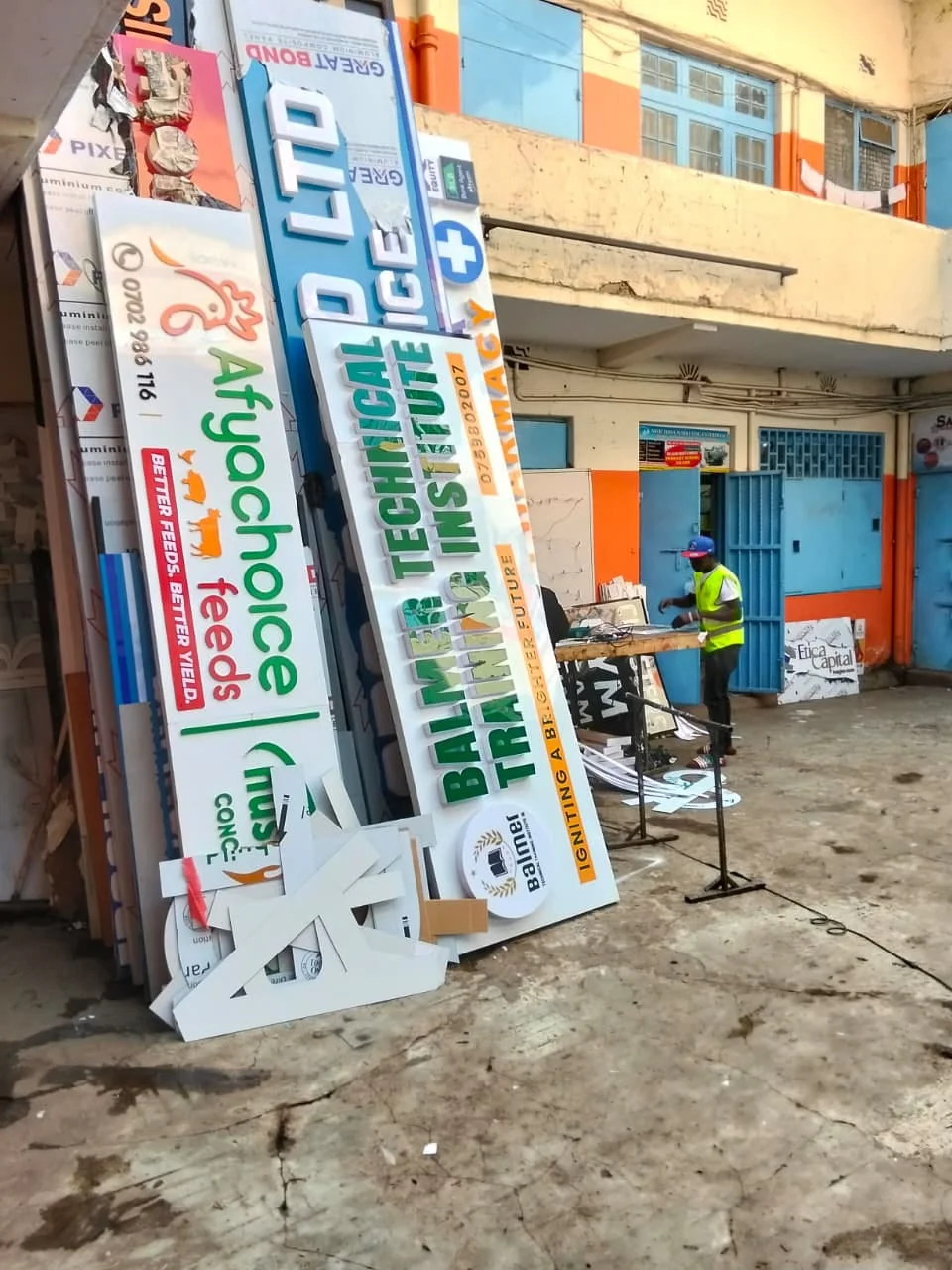
Two shops on the same street, selling the same thing, can take very different money — and often the difference is not price or stock but whether anyone can tell the shop is there. Placement is the cheapest lever a physical business has, and it is usually the one nobody has looked at.
Start from where the customer actually is
Most signs are positioned from inside the shop looking out. That is exactly backwards. Stand where your customer stands.
- Walk your own approach. Come from both directions on the pavement, at the pace people actually walk, and note the first point your sign becomes readable. If that point is three metres from the door, you are invisible until it is too late to change lanes.
- Check the sightlines that move. A parked matatu, a hawker’s stand, a tree in leaf, a neighbour’s awning — obstructions in Nairobi are rarely permanent, which means the test has to be repeated at different times of day.
- Look up, then look down. Pedestrians in a crowd look at eye level and below. Drivers look up. Most shops have one of these and not the other.
- Count the seconds. A driver at 30 km/h has around two seconds on your frontage. That is enough for a name and a trade, not for a list of services.
The two-second rule
If a stranger cannot say what you sell and what you are called within two seconds of seeing your frontage, the sign is doing one job when it needed to do two. Trade first, name second, everything else on the window.
The three positions most businesses are missing
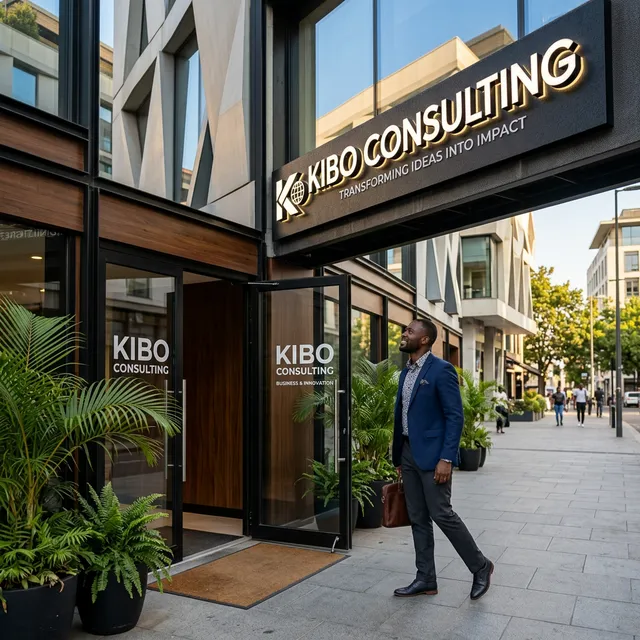
- Perpendicular to the wall. A projecting or blade sign is readable to everyone walking along the pavement. A flat fascia is only readable to people already looking straight at your building — which is almost nobody on a busy street.
- At the corner or junction. The decision to turn happens before the shop is in sight. A sign at the junction reaches people while the choice is still open.
- On the ground and on the glass. Window vinyl, an A-board, floor graphics — these catch the downward gaze that fascia signage misses entirely.
Making the entrance obvious
A surprising number of walk-ins are lost at the last two metres, by people who found the shop and then could not tell how to get in.
- Mark the door itself, not just the building.
- State opening hours where they can be read from outside, and keep them accurate. A wrong sign is worse than none.
- If you are on an upper floor or through a courtyard, say so at street level with a direction and a floor number.
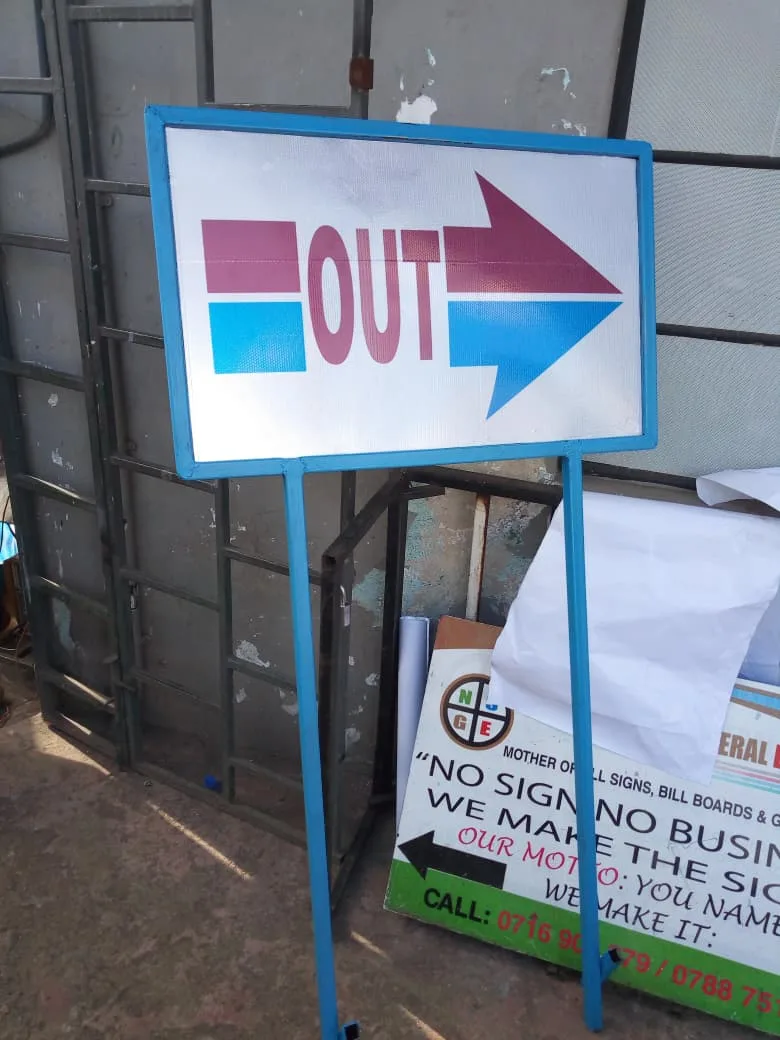
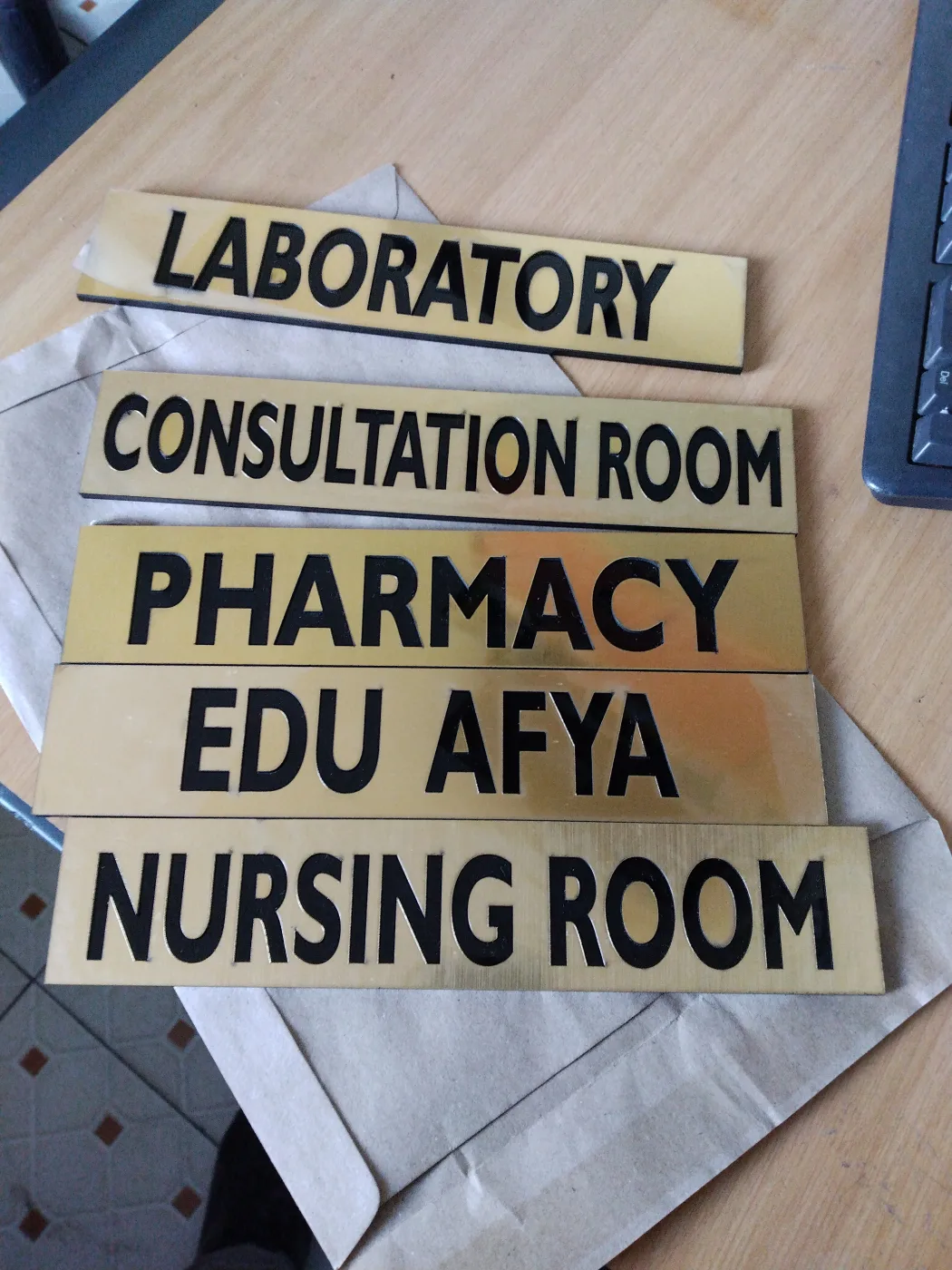
- Directional signage inside a building is what turns “they are in here somewhere” into an actual visit.
Lighting is placement too
Half of Nairobi’s trading day is dark or nearly dark. An unlit sign simply stops existing around six o’clock.
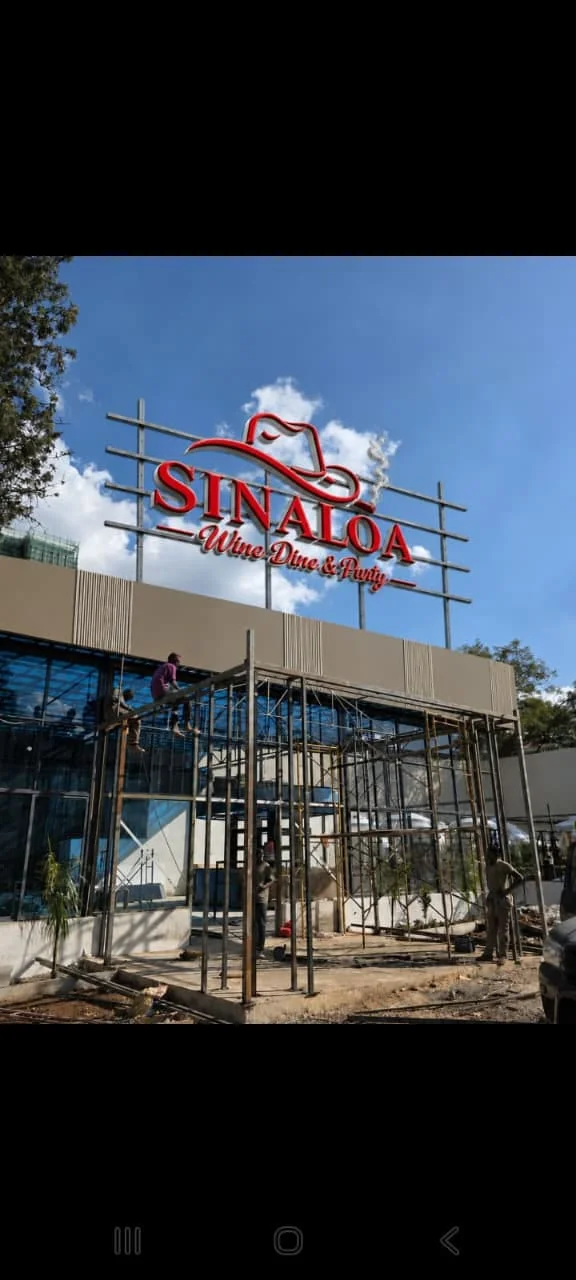
- Illuminated or halo-lit letters keep working after dusk and read as an open, staffed business.
- A light box is the cheaper route to the same result and is well suited to a projecting position.
- Reflective vinyl costs little and does real work anywhere headlights fall.
- Half-lit is worse than unlit. A sign with three dead letters says nobody is minding the shop. Fix it the week it happens.
We fabricate and install shopfront signage across Nairobi from Mecca House on Mfangano Street, and we are happy to walk the frontage with you before anything is quoted — the placement conversation is usually worth more than the sign specification.
Frequently Asked Questions
A projecting or blade sign perpendicular to the wall, because it is readable to people walking along the pavement rather than only to those directly facing your building. On a busy street it typically reaches far more passers-by than a flat fascia alone.
Outdoor advertising signage generally requires county approval, and landlords usually have their own conditions in the lease. Confirm both before fabrication, because the permitted size and projection can change the design. We can advise on what is typically approved, but the application is yours to make.
Fascia signage generally sits above the door and below the first floor. The mistake to avoid is mounting so high that pedestrians close to the building never look up at it. If most of your customers arrive on foot, lower and closer beats larger and higher.
If you trade past dusk, or your customers pass in the evening, an unlit sign is invisible for a large part of your trading day. A light box is the least expensive way to get that visibility; built-up illuminated letters cost more and look considerably better.
Products in This Guide

Continue Reading

Ready to Make Your Business Impossible to Miss?
From 3D signs to light boxes, we design, print and install signage that pulls customers in — across Nairobi and beyond.
Chat on WhatsApp
Join the Conversation