
Acrylic, ACP or Flex: Choosing the Right Material for a Shop Sign

The lowest price per square foot often buys the most expensive sign per year. A flex face sags after one long rains season. An acrylic panel left in full sun yellows. Either way, you pay twice. Choosing the material is a five-minute decision once you know the trade-offs, and it decides how long the sign keeps looking right.
The short answer
For a sign that lives outdoors in full sun and rain, choose ACP (aluminium composite panel) or brushed aluminium. For lit signs and indoor lettering, choose acrylic. For a short lease, an indoor wall or a tight budget, printed flex on a welded frame is still the sensible buy.
Key takeaways
- ACP is the outdoor workhorse: rigid, flat and weather-proof, priced on our list from KSh 4,500 per sq ft for storefront work.
- Acrylic is for light and for indoors: it carries backlighting well, but it belongs under a canopy or inside.
- Flex is the budget and short-lease option: fine indoors, weakest when stretched over a large outdoor frame.
- On a roadside sign the post fails before the panel, so ask what the sign is fixed to as well as what it is made of.
What each material actually is
ACP is a sandwich: two thin aluminium skins bonded to a plastic core. The original brand, DIBOND, is made with two 0.3 mm aluminium cover layers and a polyethylene or mineral core, according to its manufacturer. So it stays flat. It does not rust. It can even be folded into trays.
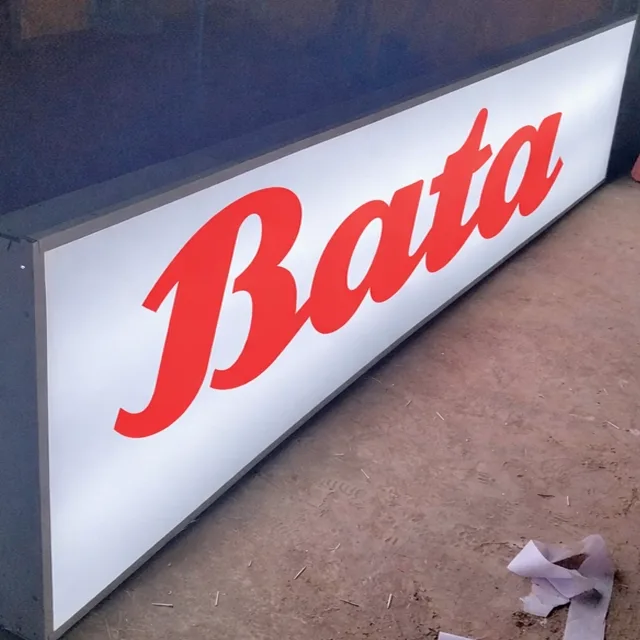
Acrylic is a solid plastic sheet, clear or coloured, that can be cut into letters or used as the face of a sign lit from behind. It spreads light evenly. That is why most lit fascias and reception logos use it.
Flex is a PVC-coated fabric, printed in full colour and stretched over a welded steel frame. Quick, cheap, easy to reprint when the offer changes.
| Material | Best for | Where it lets you down | Starting price on our list |
|---|---|---|---|
| ACP / brushed aluminium | Outdoor fascias in full sun and rain, roadside boards | Costs more up front than flex | From KSh 4,500 per sq ft (storefront) |
| Acrylic | Lit faces, light boxes, indoor and canopy lettering | Exposed to full sun with no cover, it can dull and stain | Light boxes from KSh 18,000 |
| Flex on a frame | Indoor walls, short leases, temporary or seasonal signs | Large outdoor faces sag and lift at the edges | Signboards from KSh 3,500 per sq ft |
| Built-up 3D letters | A premium name on a wall, with or without lighting | Finish choice drives the price far more than size | From KSh 15,000 |
The failures we see on Nairobi frontages
Most sign problems on a street come down to material and fixing. The first heavy rain shows them up.
The costly mistake Stretching cheap flex over a large outdoor frame and expecting it to last. Wind loads the fabric, the edges lift, water gets behind the print, and within a season the sign makes a healthy business look like it is struggling. Outdoors, we print onto ACP or brushed aluminium for exactly this reason, and we save flex for places where it is protected or meant to be temporary.
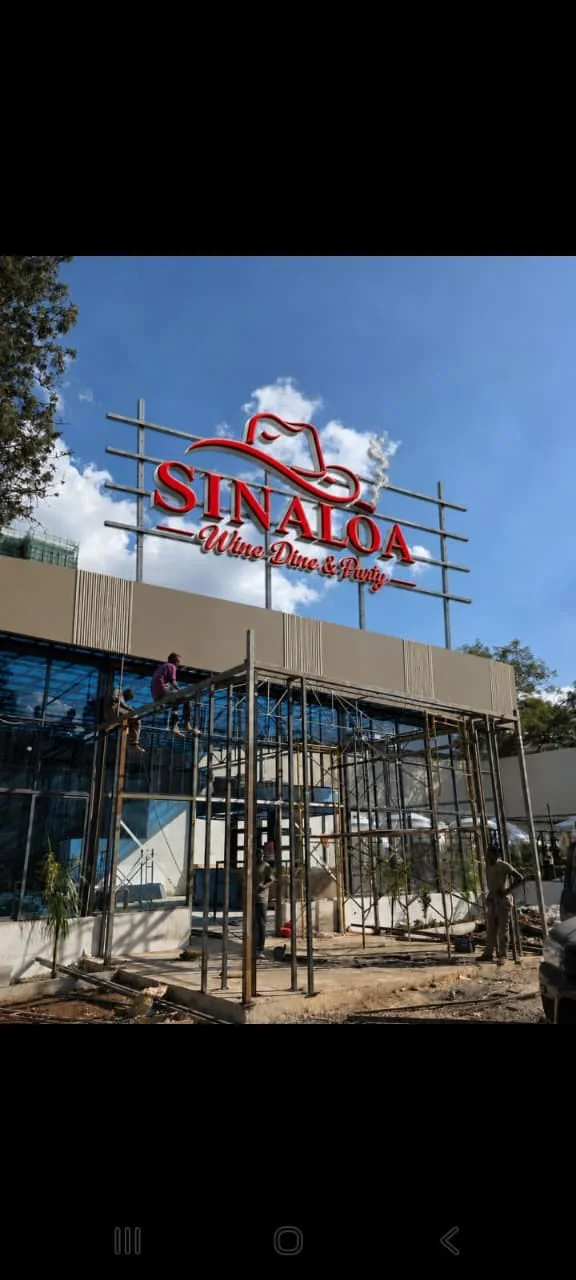
Two more failures come up often. On a post-mounted roadside signboard, the weak point is almost never the panel; it is the post, which is why ours are galvanised and set in concrete. And on a rough plastered wall, individual 3D letters fixed straight onto the plaster rarely sit in a clean line, so a backing panel is usually the better answer.
Cheap materials carry a cost the first invoice never shows, and it arrives later as repairs, reprints and lost walk-ins; we set out the arithmetic in the hidden cost of cheap signage.
Choose in three questions
- Will it be lit? If the sign needs to work after dark, you are choosing between an acrylic-faced light box for a picture, menu or full-colour logo, and lit letters for a name. Flex is not the answer for a lit sign that has to look good for years.
- Is it in full sun and rain, or under cover? Exposed fascias and roadside boards go on ACP or brushed aluminium. Under a canopy, in a mall or indoors, acrylic and flex both work well.
- How long will you trade from this wall? On a one-year lease or a seasonal promotion, a framed flex sign you can reprint is the right spend. On a long lease, the heavier material pays for itself in the years you do not replace it.
For a name that has to look established, built-up 3D letters are their own choice: acrylic under cover, brushed aluminium on exposed walls, mirror stainless where the budget allows.
The layout decides more than the material
A shop sign has about three seconds. That is how long someone passing in a matatu will look. Even a good panel fails if it carries six services and a paragraph. Set the trading name large, one line saying what you sell second, and a phone number big enough to dial from across the road.
Before you approve the proof Hold the printed proof at arm's length and look at it for three seconds. If you cannot say the business name and what it sells, the sign is too busy, whatever it is made of.
Placement matters as much as content. We cover height, angle and sightlines in how sign placement brings in walk-in customers.
Frequently Asked Questions
Deciding now? A photograph of the wall and its width is enough to start. The material we suggest will fit the spot and the lease, not the top of our price list.
Sources: ACP construction from the manufacturer's product page, 3A Composites, DIBOND (read 14 October 2026). Prices are Signsotech's published starting prices, October 2026.
Products in This Guide


Continue Reading

Comments are temporarily unavailable. Please check back soon.
Ready to Make Your Business Impossible to Miss?
From 3D signs to light boxes, we design, print and install signage that pulls customers in — across Nairobi and beyond.
Chat on WhatsApp
Join the Conversation