
Do You Still Need Receipt Books After eTIMS? What Paper Still Does

Yes, most businesses still need a printed book, but not for the job it used to do. Since eTIMS, the tax invoice lives in KRA's system, and no handwritten receipt can stand in for it. What paper still does well is everything around the sale: the delivery that leaves your gate, the job card on the bench, the cash counted at the end of the day.
The short answer
A printed receipt is no longer the tax document. Your customer needs an eTIMS invoice to claim the expense. Keep printed books for delivery notes, job cards, petty cash and cash-collection records, and add a field on each page for the eTIMS invoice number so the paper and the system always match.
Key takeaways
- Since 1 September 2023, every business, VAT-registered or not, has to issue its invoices through eTIMS.
- Since 1 January 2024, a business expense without a valid electronic tax invoice cannot be deducted for income tax.
- A printed book still proves what happened on the ground: goods delivered, work done, cash received.
- Redesign, do not discard: one extra line for the eTIMS invoice number links every page to the tax record.
Two dates changed what a receipt is for
KRA's public notice of 27 December 2023 set out both rules. From 1 September 2023, all persons carrying on business, including those not registered for VAT, must generate and send their invoices to KRA through eTIMS. From 1 January 2024, any business expenditure not supported by a valid electronic tax invoice is not deductible for income tax.
The second rule is the one your customers feel. A company buying from you can no longer claim the purchase against its tax if all it holds is a paper receipt. That is why many buyers now ask for "an eTIMS invoice" before they pay.
For a business that is not VAT-registered, KRA offers a simpler route called eTIMS Lite, reached by dialling *222# or through ecitizen.kra.go.ke. You do not need special equipment to issue a compliant invoice.
The mistake to stop making Handing a corporate customer a stamped receipt and assuming that settles it. Their accountant will come back for an eTIMS invoice, and until they get one your payment may sit in a queue. Issue the eTIMS invoice at the point of sale, and treat the paper as your own record.
What a printed book still does well
Paper earns its place where a phone or till is not to hand, and where you need a signature or a physical copy to change hands.
| Book | What it proves | Why paper still helps |
|---|---|---|
| Delivery notes | Goods left your premises and were received | The customer signs the copy at the gate or on site |
| Job cards | What was ordered, by whom, and when it is due | Travels with the job through the workshop |
| Cash receipts | Money was handed over to a named person | Lets you reconcile the day's takings against a numbered pad |
| Petty cash vouchers | Small payments out, approved and signed | Keeps the cash box honest between bank days |
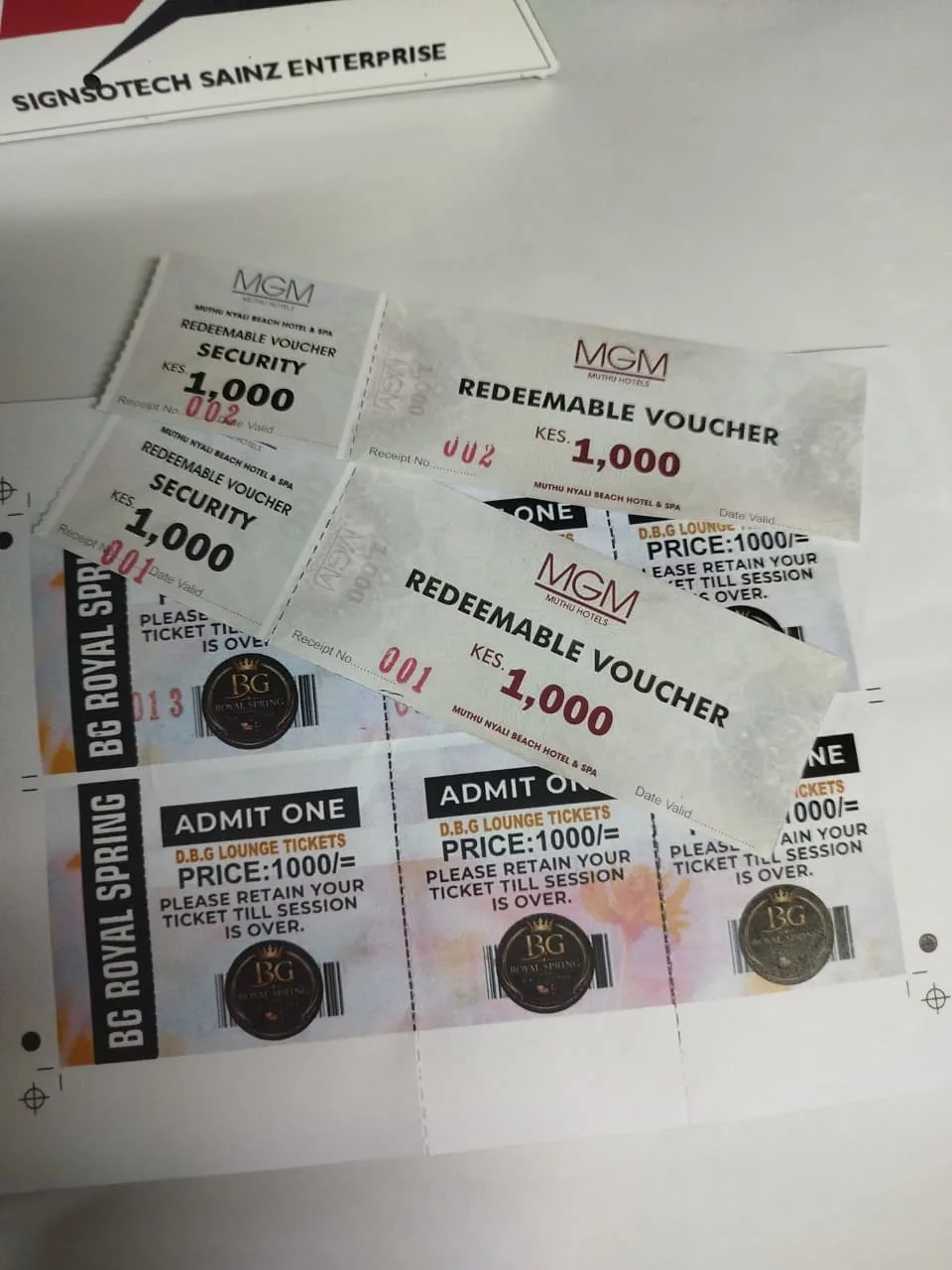
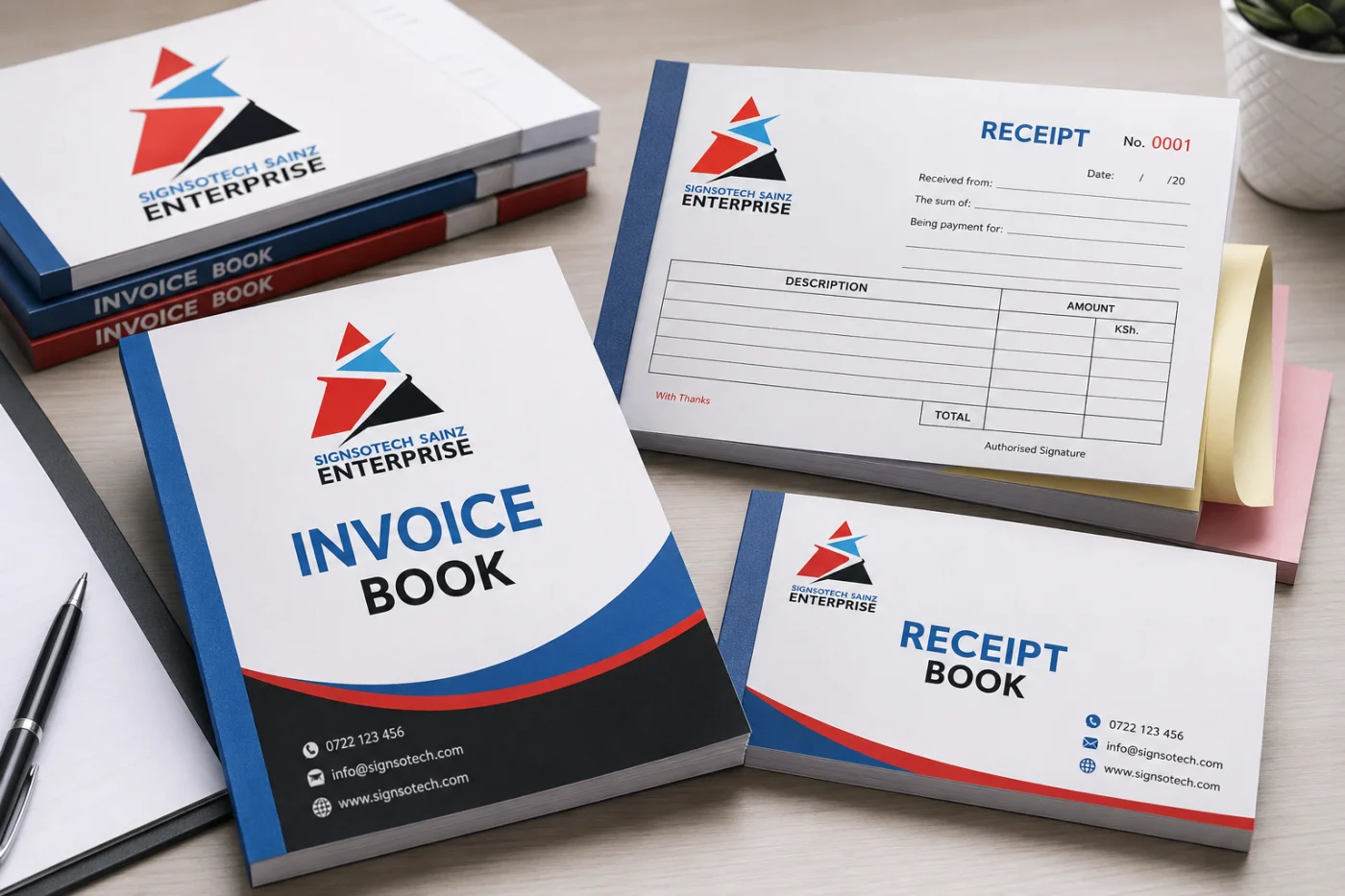
The value of all of these comes from one thing: the number. A receipt book is an accounting control that happens to be printed. We number our books in a continuous run across the whole order rather than restarting at 001 in every book, so a missing page shows up straight away. Our receipt books are carbonless NCR in duplicate or triplicate, with white for the customer and pink or yellow for the office.
Set your books up for eTIMS in four steps
- Add an "eTIMS invoice no." line. Whoever fills the page writes the eTIMS invoice number beside the sale or delivery. Your paper record and the tax record now point at each other.
- Print a short note at the foot. Something like "This is a delivery record. An eTIMS tax invoice is issued separately" stops customers treating the slip as their invoice.
- Keep numbering continuous. One unbroken sequence across all books, and a register of which book went to which branch, driver or cashier.
- Choose the right book for the job. Invoice and receipt books for over-the-counter records, and serialized, perforated ticket and voucher books where a stub has to be torn off and kept.
Branding still matters on paper. A clean, numbered book with your name and colours tells a customer they are dealing with an established business, a point we cover in why branded receipt books make a small business look bigger.
Ask your accountant one question Which records do they want kept on paper, and for how long? Tax rules are their field, not ours. Once you know, we will lay the book out with exactly those fields and nothing extra.
Frequently Asked Questions
Books designed before eTIMS usually carry fields you no longer need and miss one or two you do. One photo of a page is enough to tell which.
Sources: Kenya Revenue Authority, public notice on electronic tax invoicing for non-VAT registered persons (27 December 2023) and press release on simplified eTIMS solutions (4 March 2024), both read 14 October 2026. This article is practical guidance on records, not tax advice.
Products in This Guide


Continue Reading
Comments are temporarily unavailable. Please check back soon.
Need Print That Works as Hard as You Do?
Business cards, brochures, receipt books and more — premium print with fast turnaround from Mecca House, Nairobi CBD.
Chat on WhatsApp
Join the Conversation