
Screen Print, DTF or Embroidery? How to Brand T-Shirts Without Overpaying

A five-colour logo printed on 30 shirts is one of the most expensive small orders you can place, and nothing about the shirt is to blame. The branding method sets the price far more than the fabric does. Pick the method that suits your artwork and your quantity, and the same budget buys better shirts.
The short answer
Screen printing is the lowest cost per shirt in volume and wears the longest, but every colour adds a screen. DTF and heat transfer print full colour with no per-colour cost, so they win on short runs and photographic artwork. Embroidery is stitched in, never cracks, and looks like uniform rather than giveaway.
Key takeaways
- Count the colours in your logo before you ask for a price. In screen printing each colour is a separate screen.
- Short run or full-colour art: DTF or heat transfer, with no extra charge per colour.
- Staff uniform: embroidery on the left chest, priced by the number of stitches rather than the number of colours.
- Choose the fabric for the day it will be worn: dry-fit for road events, poly-cotton for uniforms that are washed constantly.
Screen printing costs least per shirt in volume, if the colours are few
Screen printing pushes ink through a fine mesh, one screen per colour. Once the screens are made, each extra shirt costs very little, and the ink sits thickly enough to last through years of washing. That is why it wins for 200 event shirts with a one- or two-colour logo.
The catch is the set-up. A five-colour logo means five screens, five alignments and five passes, and on a run of 30 shirts that cost is spread over very few pieces. Before asking for quotes, count the colours. If the logo has a one-colour version, using it for the shirts can cut the price sharply.
The costly mistake Sending a gradient or photographic design for a small screen-printed run. Gradients need extra screens or halftones and still print poorly at small sizes. For artwork like that, ask for DTF instead, or simplify the design for the shirt.
DTF and heat transfer suit short runs and full-colour art
DTF (direct to film) prints the design onto a film, which is then fused onto the fabric with heat and pressure. Heat transfer works on the same principle. Neither has a cost per colour, so a full-colour logo, a photograph or a design with fine gradients costs the same as a single colour. That makes them the right answer for a run of 25 or 40 shirts, for personalised names, and for designs that change for each event.
The trade-off is feel and lifespan. A transfer sits on top of the fabric. It is not dyed into it. So ask how it has been tested for washing, and follow the care label.
Embroidery reads as uniform
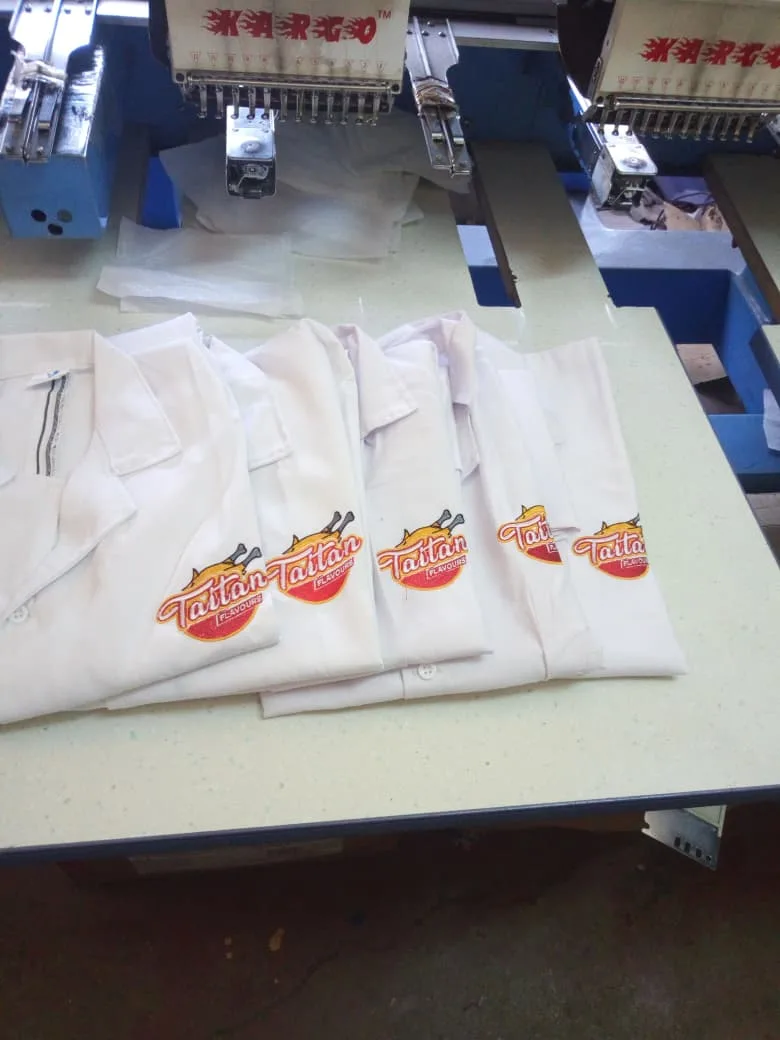
Embroidery stitches the logo into the garment with thread, so it cannot crack or peel. It is priced by the number of stitches, which means a simple mark costs far less than a detailed one, however many colours it has. On a polo shirt, a left-chest embroidered logo is the finish that looks deliberate. A printed polo tends to look like a T-shirt with a collar.
For a warm garment people keep, such as our 320 gsm brushed fleece hoodies, a mixed order works well: an embroidered logo on the chest and a printed graphic on the back.
| Method | Best for | Priced by | Watch out for |
|---|---|---|---|
| Screen printing | 100+ shirts, 1 to 3 colour logos | Number of colours, then quantity | Gradients and many colours on small runs |
| DTF / heat transfer | Short runs, full-colour or photo artwork, names | Print size, not colours | Wash care; it sits on the surface |
| Embroidery | Polos, workwear, caps, staff uniform | Stitch count | Very fine lines and tiny text |
Ask what "wash-tested" means
Suppliers often say a print is wash-tested. The standard method for colour fastness to washing is ISO 105-C06, and according to the British Standards Institution's summary of it, the results of one multiple (M) test may in some cases approximate up to five domestic or commercial launderings, at temperatures up to 70 °C. A pass is a good sign, but it does not tell you how a shirt looks after a year of weekly washing. For uniforms that are washed constantly, the method and the fabric matter more than the claim.
Choose the shirt for the day it will be worn
- Combed cotton for merchandise people are meant to keep and wear.
- Poly-cotton for uniforms: it holds colour longer and creases less.
- Dry-fit polyester for sports days, marathons and marshals. A cotton shirt on a road event is soaked by the second hour.
- Order a size curve, not an even split. Corporate orders here usually run heavier on L and XL than people expect.
Our branded T-shirts start from KSh 800 a piece with a minimum of 25, and embroidery starts from KSh 450 a piece with a minimum of 50. Apparel is one piece of a bigger picture: how a small business uses branding to look established is covered in the smart branding guide for solopreneurs.
Frequently Asked Questions
Which method suits your logo? Share the artwork, the quantity and the date you need the shirts, and you get that answer before the quote, not after it.
Sources: British Standards Institution, BS EN ISO 105-C06:2010, colour fastness to domestic and commercial laundering (read 14 October 2026). Prices and minimums are Signsotech's published starting prices, October 2026.
Products in This Guide


Continue Reading

Comments are temporarily unavailable. Please check back soon.
Ready to Build a Brand Customers Remember?
Branded apparel, tags and corporate identity done right. Talk to our team and get a quote in minutes.
Chat on WhatsApp
Join the Conversation