
Why Professional Printing Still Matters in the Digital Age

Every year somebody announces that print is finished, and every year Nairobi businesses keep ordering business cards, receipt books, company profiles and shopfront signage. Both things are true at once. Print did lose the jobs it was bad at — nobody posts a flyer to announce a flash sale any more. What it kept are the jobs where a physical object does something a screen cannot.
What print still does that a screen cannot
The honest case for print is not nostalgia. It is that a printed object occupies space in the real world, and space is the one thing digital advertising cannot buy.
- It does not compete for attention. A company profile on a procurement officer’s desk is not one tab among forty. It is the only thing in front of them.
- It does not need permission. No ad account, no algorithm, no daily budget. A branded receipt book works on the day you print it and every day after.
- It survives the transaction. A business card, a labelled bottle, a stamped delivery note — these leave the shop with the customer and stay in a wallet, a fridge or a file.
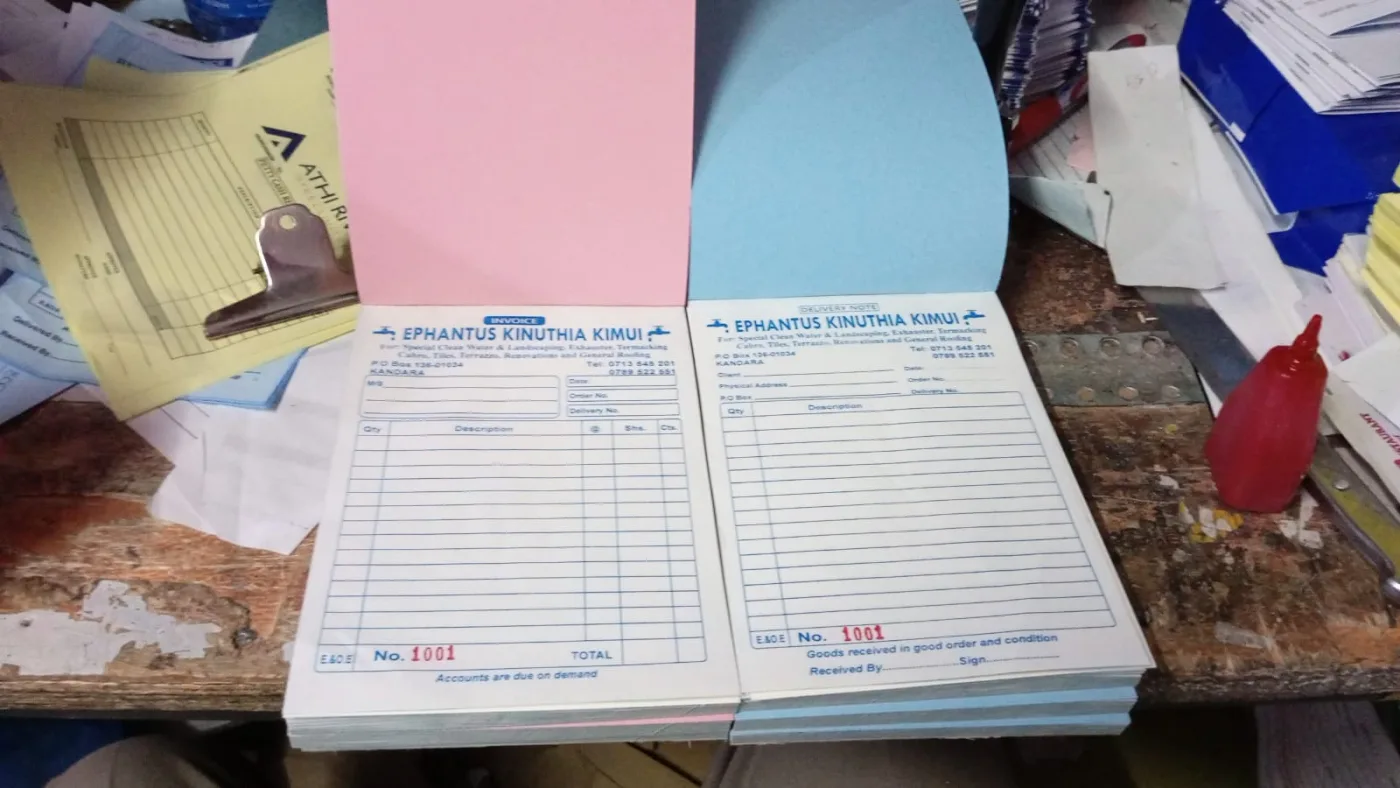
- It carries legal weight. A KEBS UCR label, a serialised asset tag, a sequentially numbered receipt book: these are not marketing. They are documents a regulator, an auditor or a customer can point at.
That last category is the one people forget. A large share of what we print is not advertising at all — it is compliance, record-keeping and identification. Those jobs were never at risk from digital.
Where cheap printing actually costs you
The difference between a good print job and a poor one is rarely visible in the file. It shows up in the material, the finish, and whether anyone checked the proof.
- Substrate. A 250gsm card and a 300gsm card feel like different companies. The price gap on 1,000 cards is small; the impression gap is not.
- Colour management. A logo that prints one shade on the flyer and another on the banner reads as carelessness, and customers notice it before they can explain it.
- Finishing. Trimming, creasing and lamination are where cheap jobs fail. A brochure that cracks along the fold on first open has already made its point.
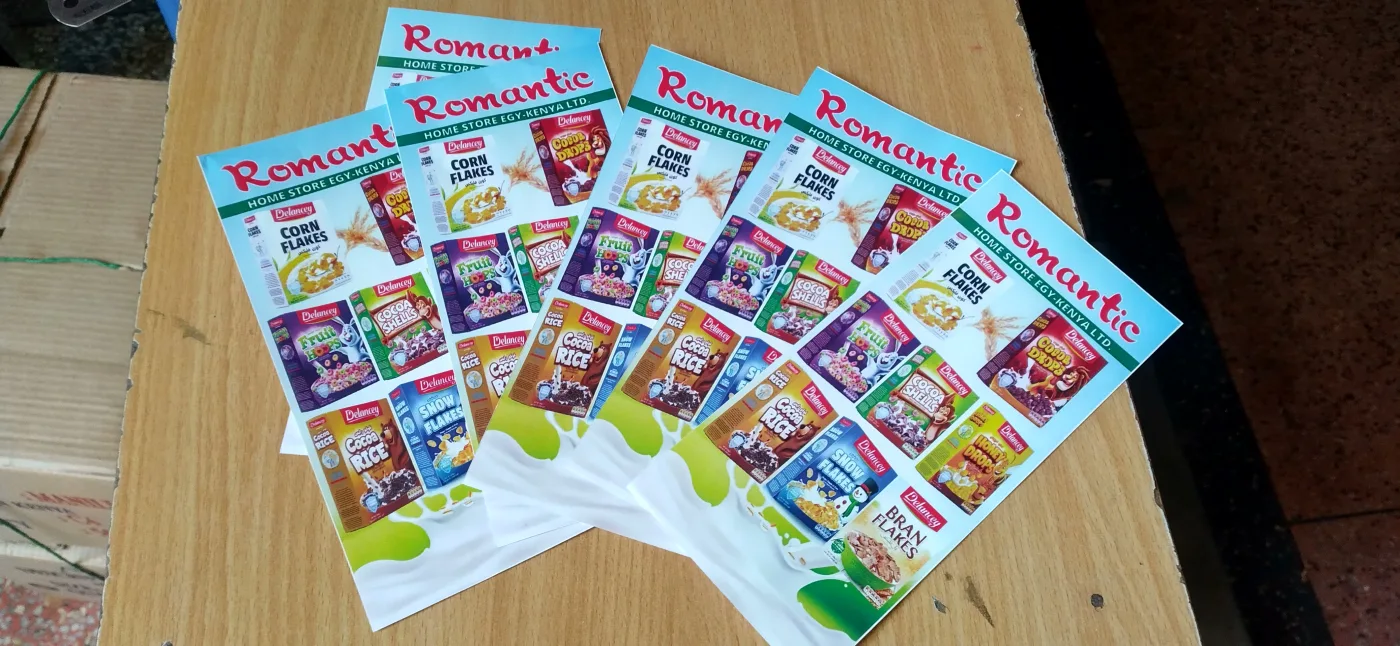
- Adhesive and ink chosen for the job. A label that curls off a cold bottle, or fades on a sunlit shelf, was printed on the wrong stock — not printed badly.
The single cheapest quality control there is
Look at the proof. We send one before every print run, and the five minutes spent reading it catches the misspelled director’s name, the old phone number and the logo at the wrong weight — all of which are free to fix before the press runs and expensive after.
Print and digital are not competing budgets
The businesses that get the most out of print treat it as the physical end of the same campaign, not as an alternative to it.
- A QR code sticker on a product turns a shelf into a landing page.
- A branded vehicle turns every delivery run into impressions in the parts of Nairobi your ads do not reach.
- A business card handed over in person converts at a rate no cold email matches, because a human already did the introduction.
None of that replaces your online presence. It gives the online presence somewhere to start.
What to print first if the budget is small
In order, for a Nairobi business finding its feet:
- Anything a regulator requires. Compliance labels are not optional, and a stalled consignment costs more than the print run.
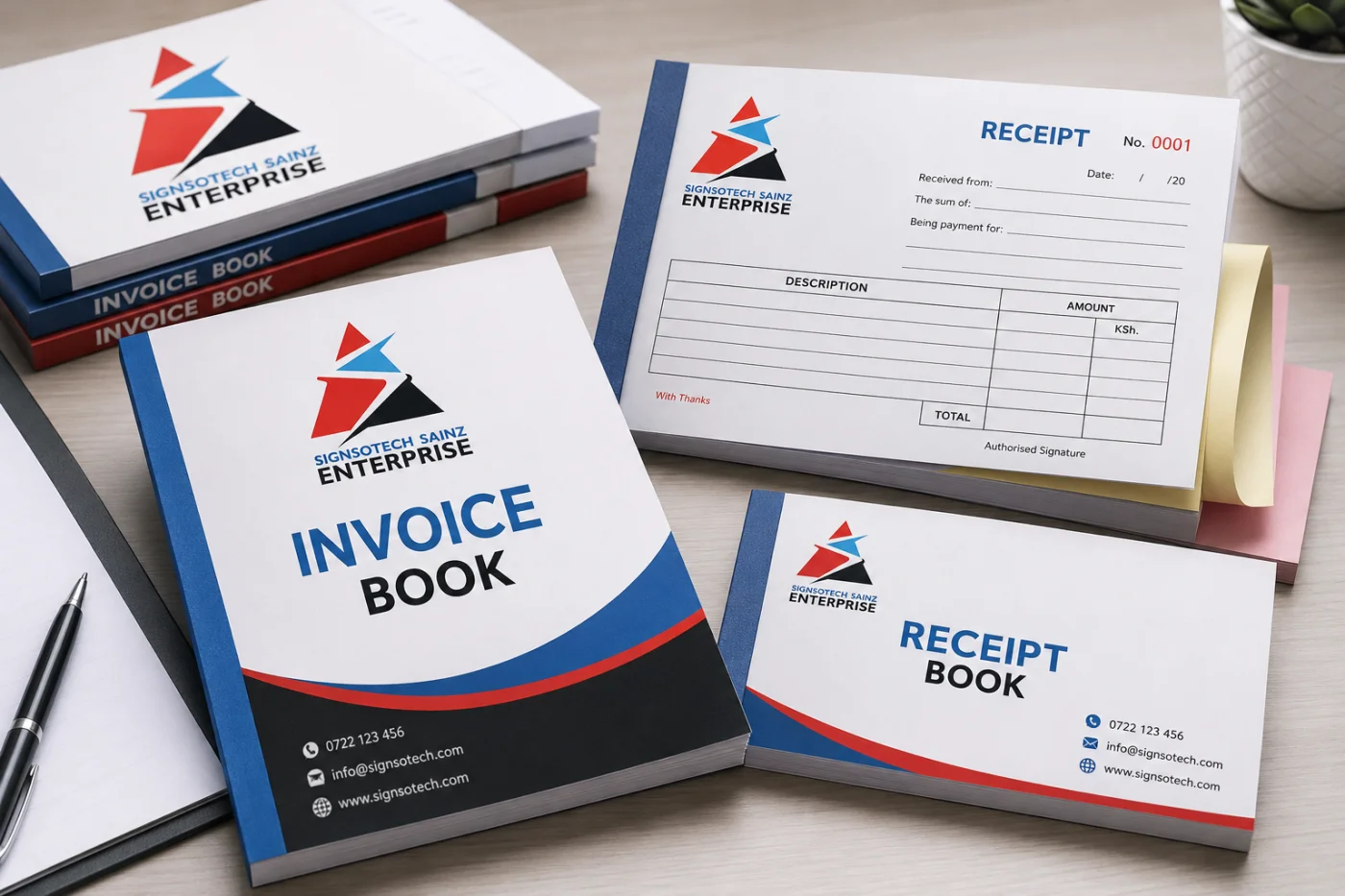
- Anything that carries money. Receipt books, invoice books, delivery notes — these are your paper trail.
- Anything that identifies you at the door. A readable shopfront sign is the cheapest customer acquisition a physical business has.
- Then the marketing print. Cards, profiles, brochures — important, but they follow the three above.
We have run this floor at Mecca House on Mfangano Street since 2008, and the order above is what we would tell a friend. If your budget only reaches the first two lines this quarter, print those two properly rather than all four badly.
Frequently Asked Questions
For compliance documents, receipts, signage and anything handed to a customer in person, yes — there is no digital substitute. For broad awareness advertising, digital usually reaches more people per shilling. Most businesses need both, in different proportions.
Ask for the weight in gsm for paper and card, and the specific stock and adhesive for labels. A printer who will not name the material is quoting on price alone. Ask what happens to that label on a cold, wet bottle, or that banner in direct sun.
A proof is the final layout sent for your approval before the press runs. It is the last moment a spelling error, an old phone number or a wrong colour is free to fix. We send one on every job. Read it properly — a print run cannot be recalled.
Send the original vector file and your brand colour references, and we match as closely as the chosen process and substrate allow. Digital, offset and large-format printing each have different colour ranges, so a colour that is exact on card may sit slightly differently on vinyl. We tell you before the run, not after.
Products in This Guide


Continue Reading
Comments are temporarily unavailable. Please check back soon.
Need Print That Works as Hard as You Do?
Business cards, brochures, receipt books and more — premium print with fast turnaround from Mecca House, Nairobi CBD.
Chat on WhatsApp
Join the Conversation