
KEBS UCR Barcodes Explained: What Every Product Business Must Know

Many entrepreneurs design a beautiful product package — only to discover later that their product cannot legally enter supermarkets. Why? Because they missed something critical: barcode registration and compliance.
Why Barcodes Matter
Barcodes allow products to be:
- scanned in retail systems
- tracked in supply chains
- verified for authenticity
Without them, many retailers simply cannot sell your product.
Label Requirements in Kenya
Kenyan regulations require consumer product labels to include information such as: product name, ingredients, manufacturer details, production and expiry dates, net content, and storage instructions. These elements help ensure product traceability and consumer safety.
The Role of KEBS Certification
The Kenya Bureau of Standards oversees product compliance and certification. Products sold without proper certification or labeling may face seizure or legal penalties. This is why compliant labeling is essential before launching products into retail markets.
The Hidden Benefit of Professional Labels
Professional labeling does more than satisfy regulations. It also builds trust, improves shelf visibility, and strengthens brand recognition. The label often becomes the first marketing message customers see.
Frequently Asked Questions
How the number is actually structured
The UCR is not a random string. Understanding the parts makes it much easier to spot an error before it reaches a scanner.
- It is a unique consignment reference, tied to a specific consignment rather than to your company in general.
- It is issued through the certification process, not invented by the supplier or the printer.
- It travels with the goods. The number on the paperwork and the number on the label have to match exactly — transcription errors between the two are one of the most common causes of a hold.
- The barcode is a machine-readable copy of that number. If the printed digits and the barcode disagree, the label is unusable.
Why a technically correct barcode still fails
- Too small. Below a certain physical width a scanner cannot resolve the bars, regardless of print quality.
- Stretched. Resizing a barcode non-proportionally changes the bar ratios and destroys it. Scale both dimensions together, always.
- No quiet zone. Artwork crowding the code either side stops it reading.
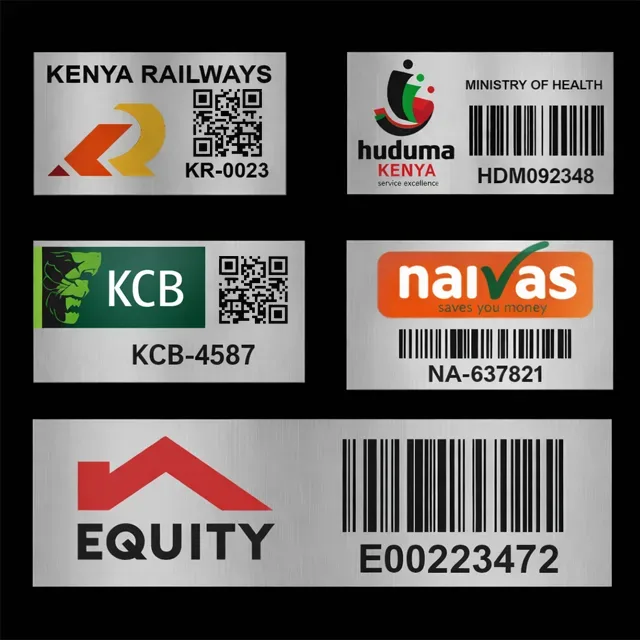
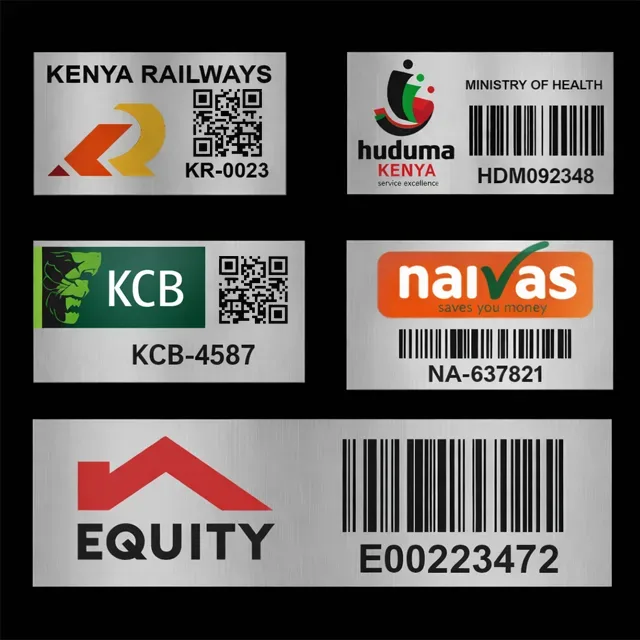
- Wrong contrast. Bars must be dark on a light ground. Coloured bars, metallic stocks and transparent films all need checking before the run.
- Curved or creased. A code wrapped tightly round a small bottle may be geometrically fine and still unreadable.
Where the errors usually enter
In practice, almost every rejected UCR label traces back to one of four moments, and none of them happen at the press.
- Transcription. Somebody retypes the number from a PDF into an email. One transposed digit and the label is worthless while looking perfect.
- Artwork resizing. A designer scales the whole layout to fit and the barcode goes with it, non-proportionally.
- Last-minute substitution. The packaging changes from matt to gloss, or from white to metallic, after the label was specified. Contrast changes with it.
- Reusing last year’s file. A previous consignment’s number left in an old artwork file is one of the harder errors to spot, because everything looks familiar.
The only test that counts
Scan the finished label, applied to the actual product, with the kind of scanner that will read it in the field. Everything else — the artwork proof, the on-screen check, the desktop scan of a flat sheet — is a rehearsal. We supply UCR KEBS labels and barcode labels at scanning tolerance, but the field test is still worth running.
Large enough that a handheld scanner reads it reliably on the actual packaging, which depends on the print process and the surface. Never scale a barcode in one dimension only. If you are unsure, we print a test strip at two or three sizes and you scan them on the real product.
It comes out of the certification process for the consignment, not from your printer. We print exactly the number you supply — which is why the number on your paperwork and the number you send us have to be checked against each other before the run.
Products in This Guide

Continue Reading


Comments are temporarily unavailable. Please check back soon.
Ready to Print Your Compliance Labels?
We print millions of KEBS UCR labels and custom product stickers at Mecca House, Nairobi CBD. Bulk discounts apply.
Chat on WhatsApp
Join the Conversation